California State Rock (Serpentinite)
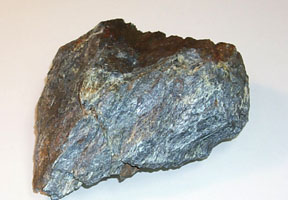
Serpentinite, or serpentine rock, is the metamorphosed remains of magnesium-rich igneous rocks, most commonly peridotite, from the earth's mantle. Serpentinite is apple-green to black and is often mottled with light and dark colored areas. Its surfaces often have a shiny or wax-like appearance and a slightly soapy feel. Serpentinite is usually fine-grained and compact but may be granular, platy, or fibrous in appearance. Serpentinite may contain naturally-occurring asbestos, a mineral hazard.
More Information
California State Mineral (Gold)

State legislation signed on April 23, 1965 designated native gold as California's official state mineral. At the signing ceremony Governor Edmund G. Brown Sr. said, "Selection of gold as our state mineral is acknowledgement of the intimate part it [gold] has played in the history of our people and of the fact that mining is a major California economic activity."
In recognition of the California Gold Discovery to Statehood Sesquicentennial (1998-2000) CGS produced the "Map of California Historic Gold Mines" as a poster at the scale of 1:1,500,000. The map shows the location of 13,500 historic California gold mines.
More Information
California State Gemstone (Benitoite)
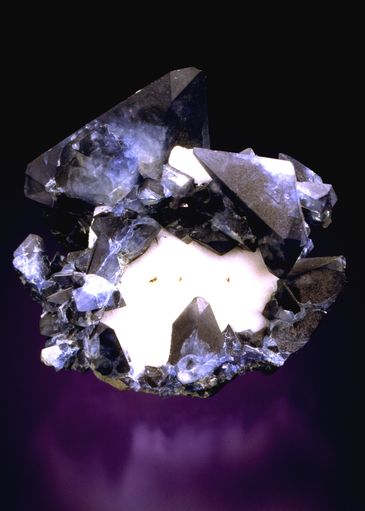
On October 1, 1985 benitoite was designated as the official state gem. Named in 1907 after the river, county, and nearby mountain range where it was found. "Benito" is a Spanish form of benedictus, meaning blessed. Crystals can occur in a rich blue color as striking and flawless as the finest sapphires.
More Information
